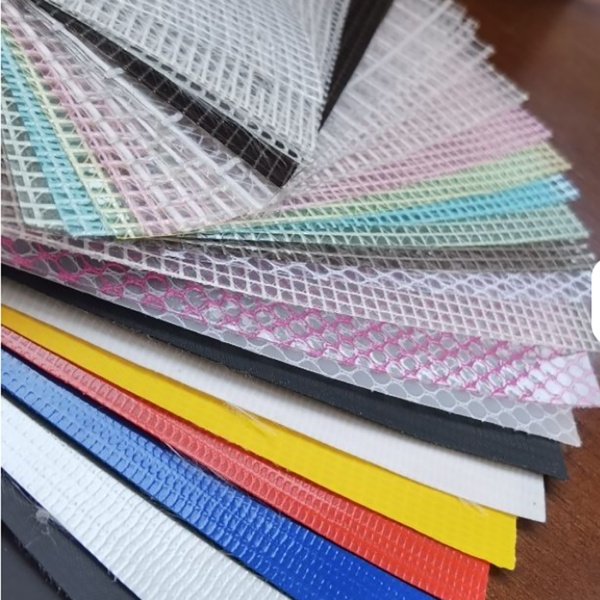
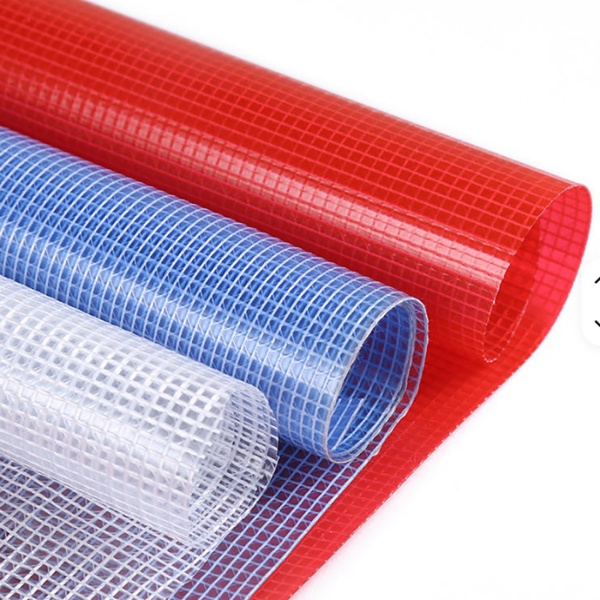
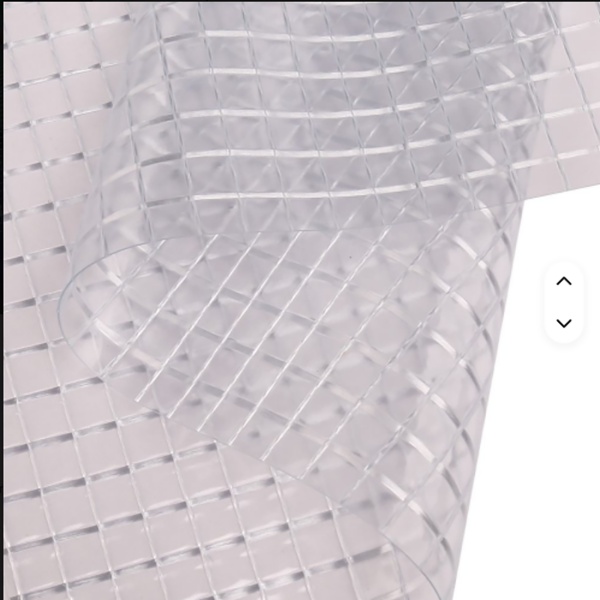
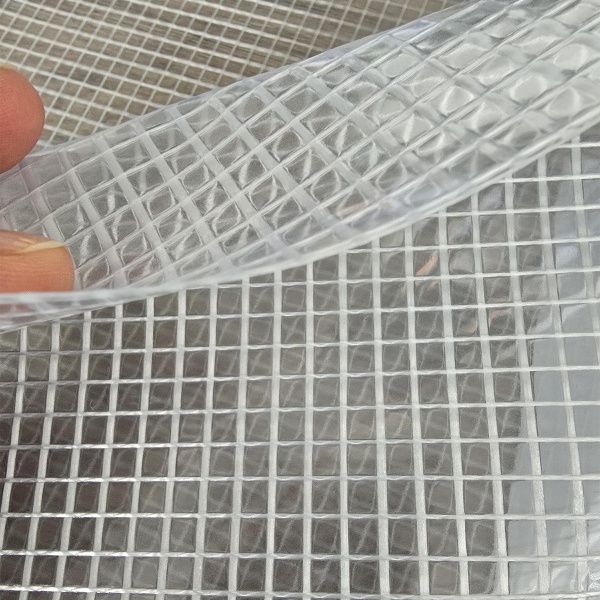
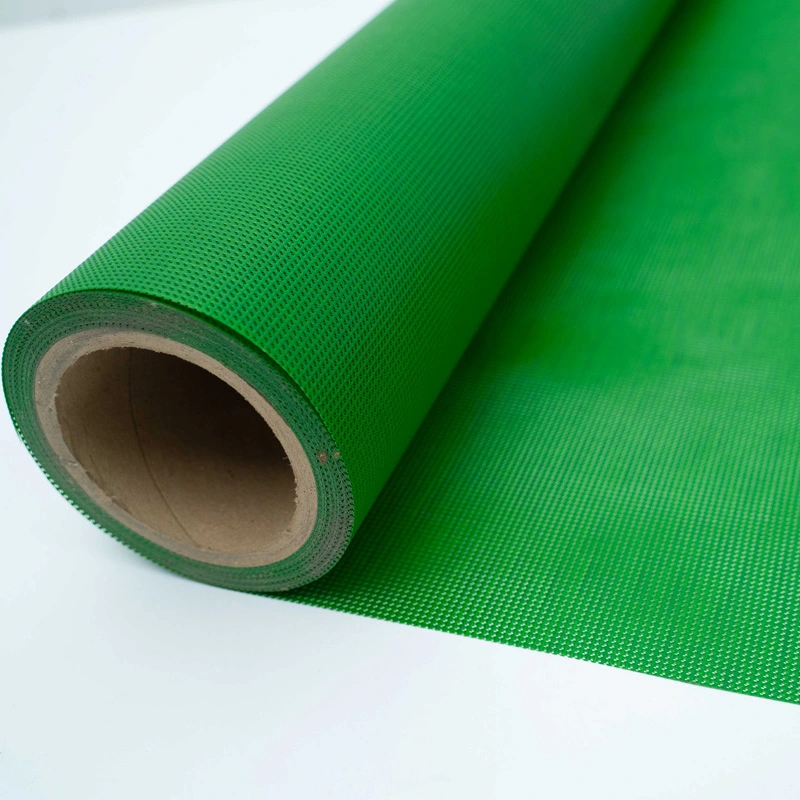
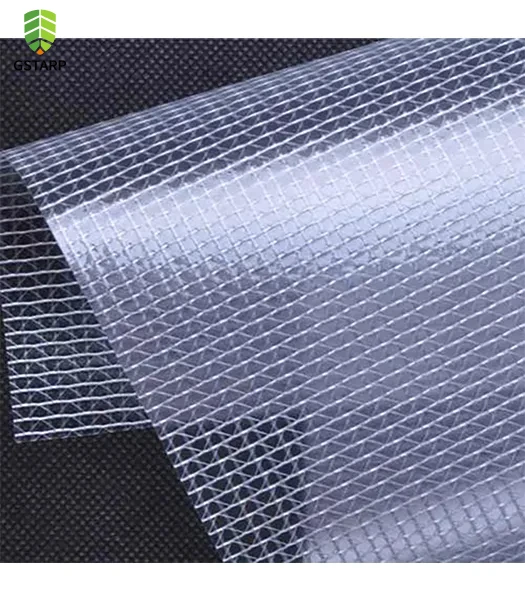
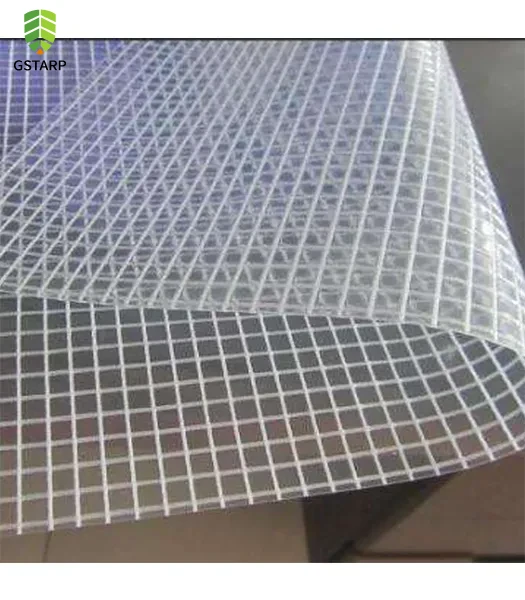
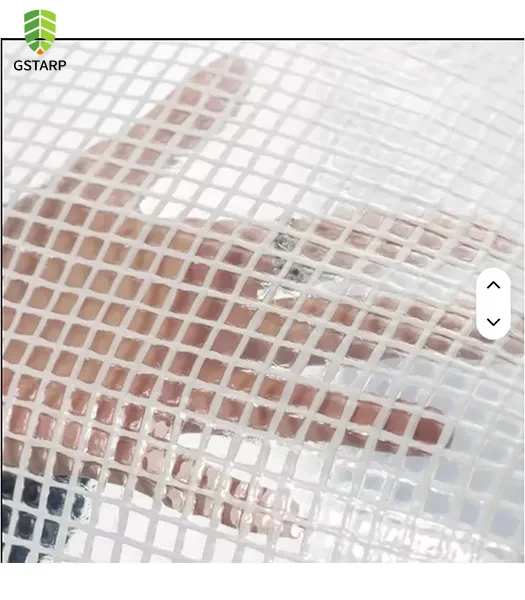
Keep visibility. Add reinforcement. Our transparent PVC fabric combines clear calendered PVC with an embedded polyester grid to improve dimensional stability and tear resistance while maintaining a clear view through the material.
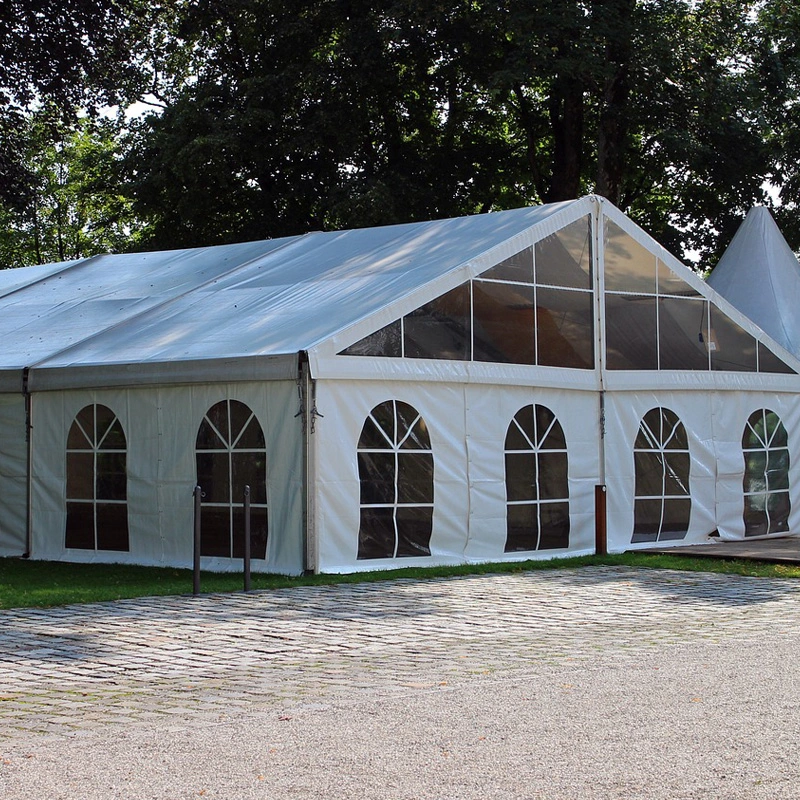
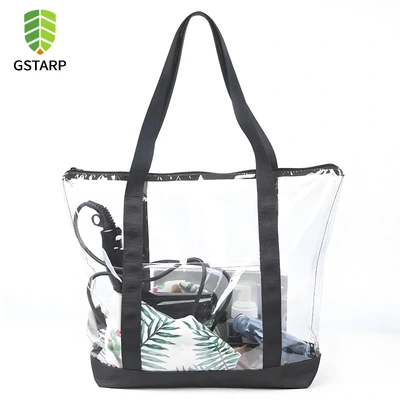
Supplied in rolls for professional converting, the material can be developed for weather curtains, transparent covers, equipment protection, tent and marquee walls, industrial partitions, warehouse covers, bags, pouches and document products.
Tell us your finished-product use, target weight or thickness, grid requirement, width, roll length, quantity and destination. We will recommend a sample direction for your sewing or welding trial.
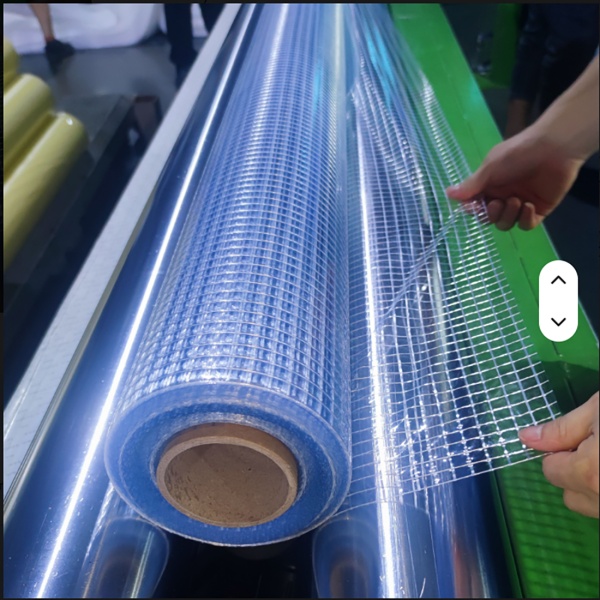
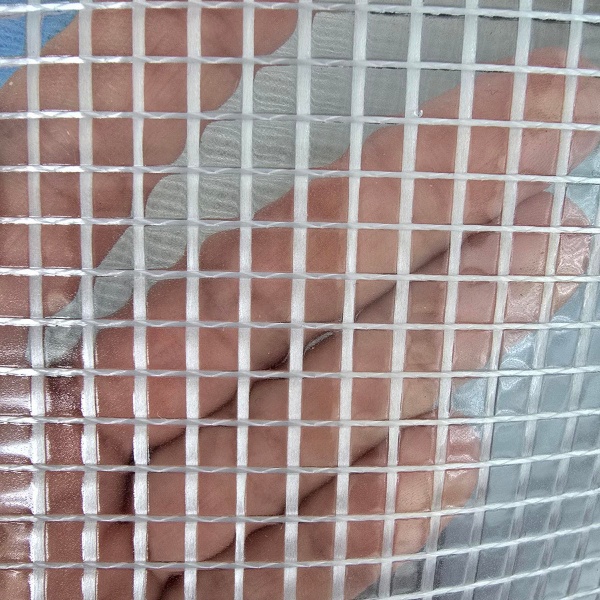
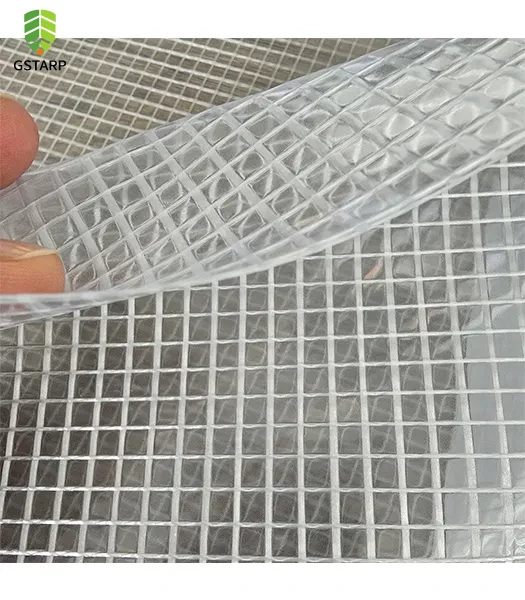
Transparent PVC mesh-reinforced fabric is a solid three-layer composite: clear PVC film / woven polyester grid / clear PVC film. During lamination, the PVC layers bond through and around the grid openings to form a waterproof sheet with visible textile reinforcement.
The polyester grid supports dimensional stability and helps distribute load, while the clear PVC surfaces provide visibility and protection from rain, splash, dust and routine handling. Unlike open PVC-coated mesh, the finished laminate has no ventilation openings.
It is supplied as industrial roll material for downstream cutting, sewing, binding, eyeleting and compatible welding trials. Finished-product performance depends on material selection, seams, edges, hardware, installation and use conditions.
Feature | Information |
Clear solid PVC surfaces | Maintains line of sight while blocking rain and splash. |
Embedded polyester grid | Adds reinforcement and dimensional stability. |
Waterproof laminate | Suitable for covers, weather screens and partitions. |
Custom material direction | Match weight, grid and flexibility to the finished product. |
Converter-friendly format | Supplied in rolls for cutting, sewing and fabrication. |
Multiple surface directions | Gloss, matte or embossed directions may be discussed. |
Project-specific additives | UV, cold-resistant, FR, anti-static or low-odor directions may be developed. |
Export roll packing | Protects rolls during international transport and warehousing. |
Parameter | Information |
Construction | Clear PVC / woven polyester grid / clear PVC |
PVC surface | Transparent; gloss shown in current samples |
Polyester grid | White shown; custom direction may be discussed |
Total material weight | Existing samples shown at approximately 300–625 gsm |
Yarn examples | 500D, 840D and 1000D photographed |
Grid examples | 2.3 × 2.3, 4.5 × 4.5, 4.6 × 4.6, 6 × 6 and 9 × 9 sample labels |
Grid opening direction | A customer reference requested approximately 5 mm openings |
Width | 1-3.5, |
Roll length | 50-100M |
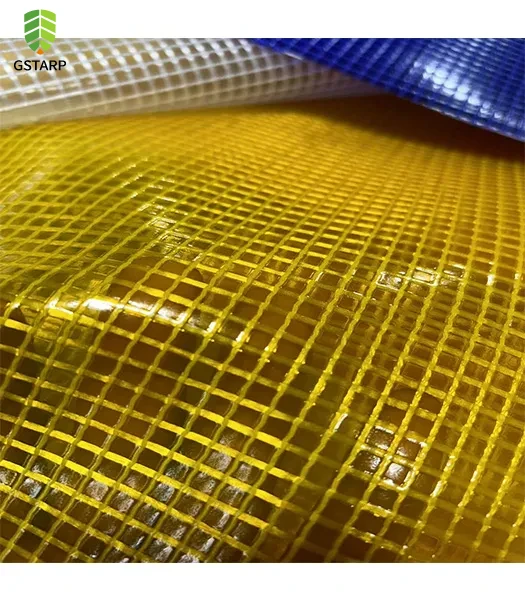
Color / transparency | Clear; tinted direction may be discussed |
Surface finish | High-gloss samples photographed |
Outdoor option | UV package may be developed |
Low-temperature option | Cold-resistant formulation may be developed |
Other options | FR, anti-static, low-odor or restricted-substance direction |
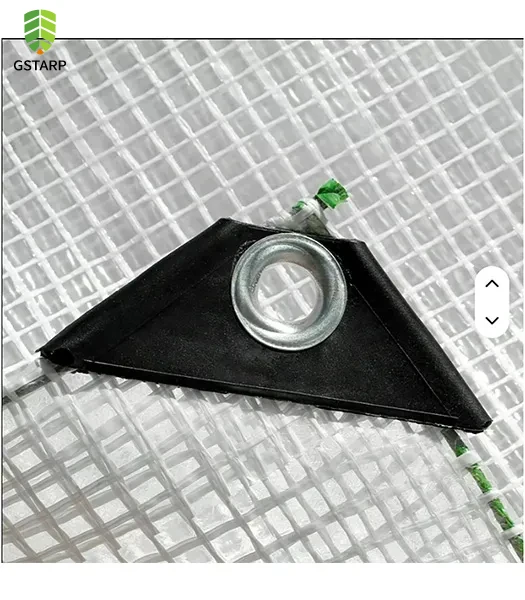
Converting | Cutting, sewing, binding and eyeleting |
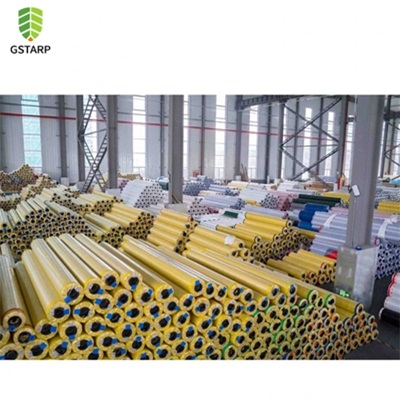
Packing | Roll protection and export packing |
MOQ / lead time | 30DAYS |


Layer | Function | What the buyer should specify |
Top clear PVC layer | Visibility, surface protection and weather barrier | Gauge, clarity, finish and formulation direction |
Woven polyester grid | Reinforcement, load distribution and dimensional stability | Yarn denier, color and grid geometry |
Bottom clear PVC layer | Encapsulation, sealing and converting surface | Gauge, finish and welding/sewing requirement |
Step | Process | Quality focus |
1 | PVC formulation and mixing | Batch identification, clarity, flexibility and agreed additives |
2 | Calendering clear PVC film | Gauge control, surface appearance and consistent film quality |
3 | Preparing the polyester grid | Yarn, grid density/opening, alignment and tension |
4 | Laminating PVC / grid / PVC | Layer bond, grid position, bubbles and visible defects |
5 | Cooling and finishing | Flatness, gloss/embossing and blocking control |
6 | Inspection and slitting | Weight/thickness, width, appearance and roll edge |
7 | Winding and export packing | Roll tension, labels, protection and traceability |
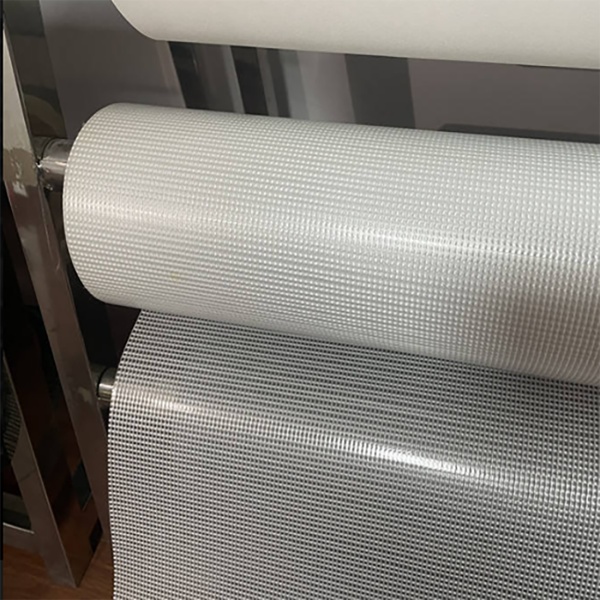
The material is made by calendering clear PVC film, positioning the selected polyester grid between the PVC layers and laminating the structure under controlled heat and pressure. After cooling and finishing, the roll is inspected, slit, wound, labelled and packed.
Grade direction | Sample reference | Best-fit applications | Selection note |
Lightweight / fine-grid | Approximately 300–390 gsm samples | Bags, pouches, document holders, organizers, light covers | Prioritize flexibility, appearance and sewing behavior |
General-purpose reinforced | Approximately 390–500 gsm samples | Equipment covers, indoor partitions, general clear covers | Balance clarity, reinforcement and handling |
Heavy reinforced | Approximately 500–625 gsm samples | Weather curtains, tent walls, repeated-use covers and enclosures | Confirm load, size, outdoor duration and welding design |
Project-specific grid | 500D / 840D / 1000D and different grid labels photographed | OEM matching and application-driven development | Approve yarn, grid and performance against a signed sample |
Start with the finished product: bag, light cover, weather curtain, tent wall, equipment enclosure or warehouse cover.
Define the panel size, expected tension, folding frequency, seam or welding method, hardware and installation conditions.
Choose the required balance of visibility, flexibility, material weight, yarn strength and grid appearance.
For outdoor use, define climate, exposure duration and the exact UV or low-temperature test requirement.
Validate the recommended sample on the buyer’s own sewing, HF-welding or hot-air equipment before mass production.
Target customer | What they manufacture | What they need from the supplier | Best CTA |
Tarpaulin / weather-curtain fabricator | Made-to-measure covers, patio curtains and clear enclosures | Stable roll quality, suitable grid, sewing/welding trial and outdoor option | Request a cover-grade sample |
Industrial sewing / HF-welding workshop | Equipment covers, partitions and protective panels | Converter compatibility, consistent dimensions and repeat orders | Send a current specification |
Tent / awning / marquee manufacturer | Windows, sidewalls and enclosure panels | Clarity, folding behavior, weld/seam performance and project compliance | Discuss panel application |
Bag / pouch factory | File bags, tool pouches and organizers | Flexible grades, visual grid options and sewing/edge behavior | Request a lightweight sample |
Importer / distributor | Stock or project supply for regional converters | Clear range logic, repeatability, documents, labels and export packing | Ask for distributor options |
OEM / private-label buyer | Application-specific finished products | Matching, custom specification, signed samples and traceable QC | Upload drawing or TDS |
Buyer question | Landing-page answer | Required evidence / action |
Can I keep visibility and add reinforcement? | Clear PVC surfaces provide visibility; the embedded polyester grid adds dimensional support. | Backlit photos and signed sample |
Which GSM and grid should I choose? | Selection starts with panel size, load, use frequency, converting method and exposure. | Application-based sample recommendation |
Can my factory sew or weld it? | Cutting and sewing are common; welding compatibility depends on the formulation and equipment. | Converter trial before bulk order |
Will batches remain consistent? | Orders should follow an approved specification, signed sample and defined QC plan. | TDS, tolerance and inspection record |
Can you support European projects? | Restricted-substance and performance requirements can be discussed for the ordered formulation. | Define market, finished use and report scope |
Can you match my current material? | Send a physical sample, photo, TDS or finished-product requirement for evaluation. | Sample-matching workflow |
Each project should be controlled against an approved specification and signed sample. Inspection scope can be defined according to the finished application and buyer requirement.
QC item | What is checked | Buyer document / decision |
Appearance | Clarity, surface defects, bubbles, contamination and wrinkles | Signed visual limit sample |
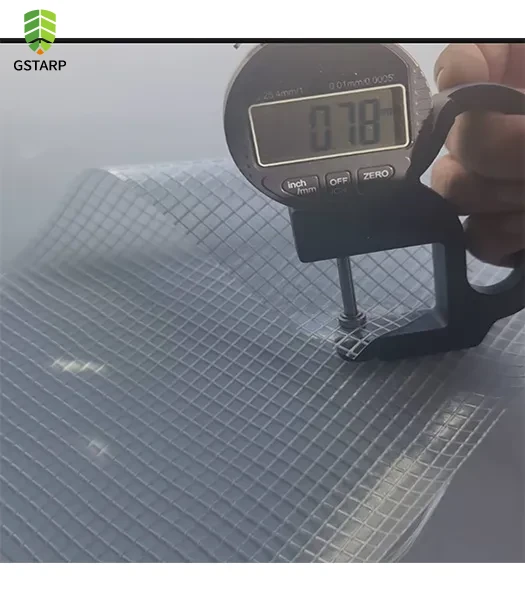
Material mass / gauge | Total GSM and/or thickness using an agreed method | TDS tolerance |
Width / roll length | Usable width, roll length and edge condition | Purchase specification |
Grid construction | Yarn, alignment, density/opening and visual uniformity | Approved sample and method |
Layer bond | Lamination integrity and delamination risk | Agreed internal or laboratory method |
Mechanical direction | Tensile and tear where required | Test method and project target |
Temperature / weathering | Cold-flex, UV or aging only when specified | Report for the ordered formulation |
Converting trial | Sewing, binding, eyeleting or welding behavior | Buyer-side trial approval |
Packing | Roll tension, core, labels, protection and pallet plan | Packing instruction |
For European projects, tell us the destination country, finished-product use, restricted substance requirements and any test standard named by your customer. Documentation must correspond to the agreed formulation and report scope. Ask us to confirm the available test evidence before you place the order.
Custom item | Options to discuss | Information required from buyer |
Material weight / thickness | Lightweight, general-purpose or heavy reinforced direction | Target GSM/gauge and application |
Polyester grid | Yarn denier, grid density/opening and color direction | Photo, sample or measured requirement |
PVC appearance | Clear, tinted, gloss, matte or embossed direction | Signed visual sample |
Roll format | Width, length, core, label and packing | Order quantity and converting line |
Outdoor performance | UV and low-temperature formulation direction | Climate, exposure and test method |
Special properties | FR, anti-static, low odor or restricted-substance direction | Standard, report scope and end use |
OEM / private label | Item code, labels and export packing | Brand artwork, packaging and annual volume |
Custom development is subject to production feasibility, minimum order quantity, sample approval and written specification confirmation.
It is a solid clear PVC laminate with a woven polyester grid embedded between the PVC layers. The PVC provides a transparent water-blocking surface, while the grid adds reinforcement.
No. The polyester grid is encapsulated inside clear PVC. The finished material is a closed, non-breathable laminate rather than perforated or open coated mesh.
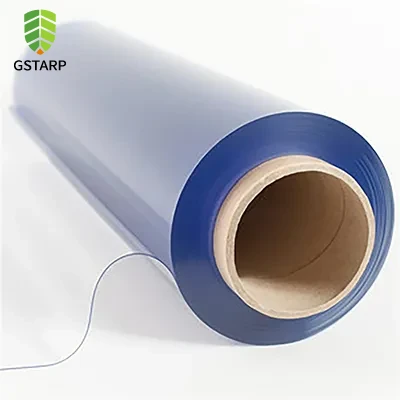
Clear PVC film has no textile reinforcement and offers an unobstructed view. Reinforced clear PVC contains a visible grid that improves dimensional support and tear resistance.
The main commercial direction is transparent covers and enclosures: weather curtains, transparent tarpaulins, equipment covers, industrial partitions, tent or marquee walls and warehouse covers. Lighter grades are also used for bags, pouches and document products.
This page is for B2B roll material supplied to fabricators, manufacturers, distributors and OEM converters. Finished products are not included unless separately confirmed.
Yes, within production feasibility and MOQ. Send the target material weight or gauge, yarn denier, grid requirement, width, roll length and finished application.
The right construction depends on panel size, load, folding frequency, hardware, seams, outdoor exposure and desired visibility. Start with an application-based sample recommendation.
A lightweight or fine-grid direction is often easier to handle and sew, but the final choice should be validated for flexibility, edge binding, stitching and repeated use.
The material can commonly be cut, sewn, bound and eyeleted. Select needle, thread, seam allowance and reinforcement according to the finished-product design.
Welding depends on formulation, thickness, grid construction and equipment settings. Request a sample and complete a converter trial before approving a production grade.
The laminate is designed as a solid water-blocking material. Finished-product waterproofness also depends on seams, stitching, welding, eyelets, edges and installation.
UV-resistant formulations may be developed. Outdoor durability depends on formulation, climate, installation, tension, cleaning and exposure. Define the test basis before ordering.
A low-temperature formulation may be discussed. Specify the test method, target temperature, exposure time and finished-product requirement.
Tell us the destination market, finished use and required substance or performance standard. Available documentation must be confirmed for the ordered formulation.
Yes. Send a physical sample, clear photos, TDS, measurements and application information. We will review the closest construction or a custom-development direction.
Application, target GSM or thickness, grid/yarn requirement, width, roll length, quantity, converting method, special performance, destination country and sample deadline.
Yes. A sample is recommended for appearance, hand feel, grid visibility, sewing, welding and finished-product evaluation.
MOQ and lead time depend on whether the construction is standard or custom, the required quantity, formulation and production plan. Request written confirmation with your specification.
Tell us what you are making. We will review the material direction, sample route and commercial requirements for your project.
RFQ field | What the buyer should provide |
Company and country | Company name, website and destination country |
Finished application | Weather curtain, cover, partition, tent wall, bag, pouch or other use |
Target material | GSM or thickness, flexibility and appearance requirement |
Polyester grid | Yarn denier, grid density/opening, color or current sample |
Roll format | Required width, roll length, core and packing |
Converting method | Sewing, binding, eyeleting, HF welding, hot-air welding or other |
Performance requirement | UV, low temperature, FR, anti-static, low odor or substance control |
Quantity | Trial quantity, first order and estimated annual volume |
Reference file | Upload drawing, TDS, photos or current material details |
Timeline | Sample deadline and target order date |
Need help choosing the right weight or grid? Send us your application, current sample or target specification. We will recommend a transparent PVC fabric direction for your cover, curtain, enclosure, tent-wall or bag project.
Application | Information |
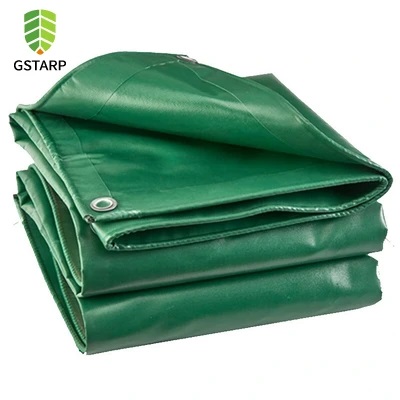
Transparent tarpaulins & weather curtains | Maintain visibility while blocking rain, splash and wind-driven debris in patio, café, pergola and temporary enclosure projects. |
Equipment covers & industrial partitions | Protect machines, controls and work areas while keeping labels, components and processes visible. |
Tent, marquee & patio walls | Use for transparent windows, sidewalls and enclosure panels that need visible reinforcement. |
Bags, pouches & document holders | Make contents easy to identify while the polyester grid supports repeated handling. |
Warehouse, pallet & roll-cage covers | Create clear protective panels and reusable covers for logistics and storage operations. |
Agricultural & outdoor enclosures | Use as viewing panels, localized covers and protective curtains where visibility is required. |
For patio, café, pergola, porch and temporary weather-screen projects, the clear PVC surface maintains visibility while the polyester grid supports the material over larger panels. Fabricators can cut and join the roll material into made-to-measure transparent covers and curtains.
Recommended buyer information: finished panel size, installation method, wind exposure, folding frequency, seam method, target clarity, grid preference and outdoor performance requirement.
Clear reinforced PVC allows operators to see controls, labels, components and processes while protecting equipment and work areas from dust, splash and routine handling. Typical constructions include machine covers, control-panel covers, workshop curtains, wash-bay screens and temporary production partitions.
Use transparent reinforced PVC for tent windows, marquee sidewalls, awning panels and temporary-structure viewing areas. Grid selection should balance the desired view, panel size, seam design, folding behavior and installation load.
Lighter or fine-grid constructions can be converted into tool pouches, file bags, document wallets, organizer pockets, transparent storage products and reusable packaging. Buyers should test flexibility, sewing, edge binding, printing or label attachment on the selected sample.
Transparent panels make labels and contents visible in warehouses and logistics operations. The material can be considered for reusable pallet covers, roll-cage covers, trolley covers and localized protective curtains, subject to finished-product design.
The material may be developed for viewing panels, equipment covers, wash-down screens and localized outdoor enclosures. Specify exposure, chemical contact, cleaning method, temperature and required test standards before selecting a grade.